
Travlla is a modern tour and travel platform for booking guided tours, holiday packages and unforgettable destinations worldwide.




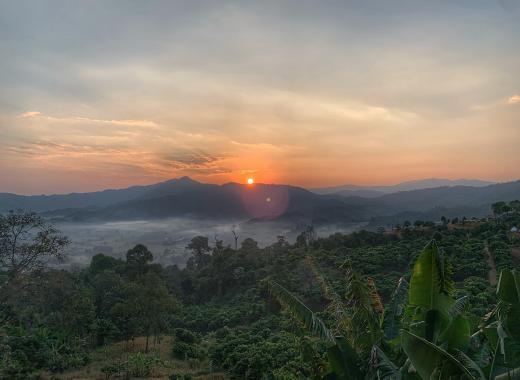
Chiang Mai was founded in 1292 by King Mangrai, who established the city inside a square of defensive walls and moats that still shape its street plan. Today it is the largest city in northern Thailand and the easiest base for exploring the region, but it is worth treating the Old City as its own destination: a compact core of temple, market and teak house, ringed by mountains on three sides.
The Lanna kingdom left a distinct artistic tradition, visible in the carved teak of Wat Phra Singh, the lacquerware and silverwork of the craft villages around the city, and in the khao soi and nam prik onwer on every corner. The city holds more than three hundred temples, many of them older than Bangkok. Each year the Yi Peng lantern festival fills the streets with paper lanterns while the Lanna rocket festival, Bun Luang, sends real rockets into the sky above the old walls.
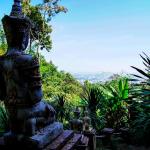
Doi Suthep rises directly above the city; the naga staircase of 306 steps leads to Wat Phra That Doi Suthep and a view across the whole valley. An hour away Doi Inthanon, at 2,565 metres the highest point in Thailand, holds waterfalls, twin royal pagodas and birdlife in a protected national park. Mae Kampong and the Bua Tong sticky waterfalls sit closer, on the road east.
Cookie preferences